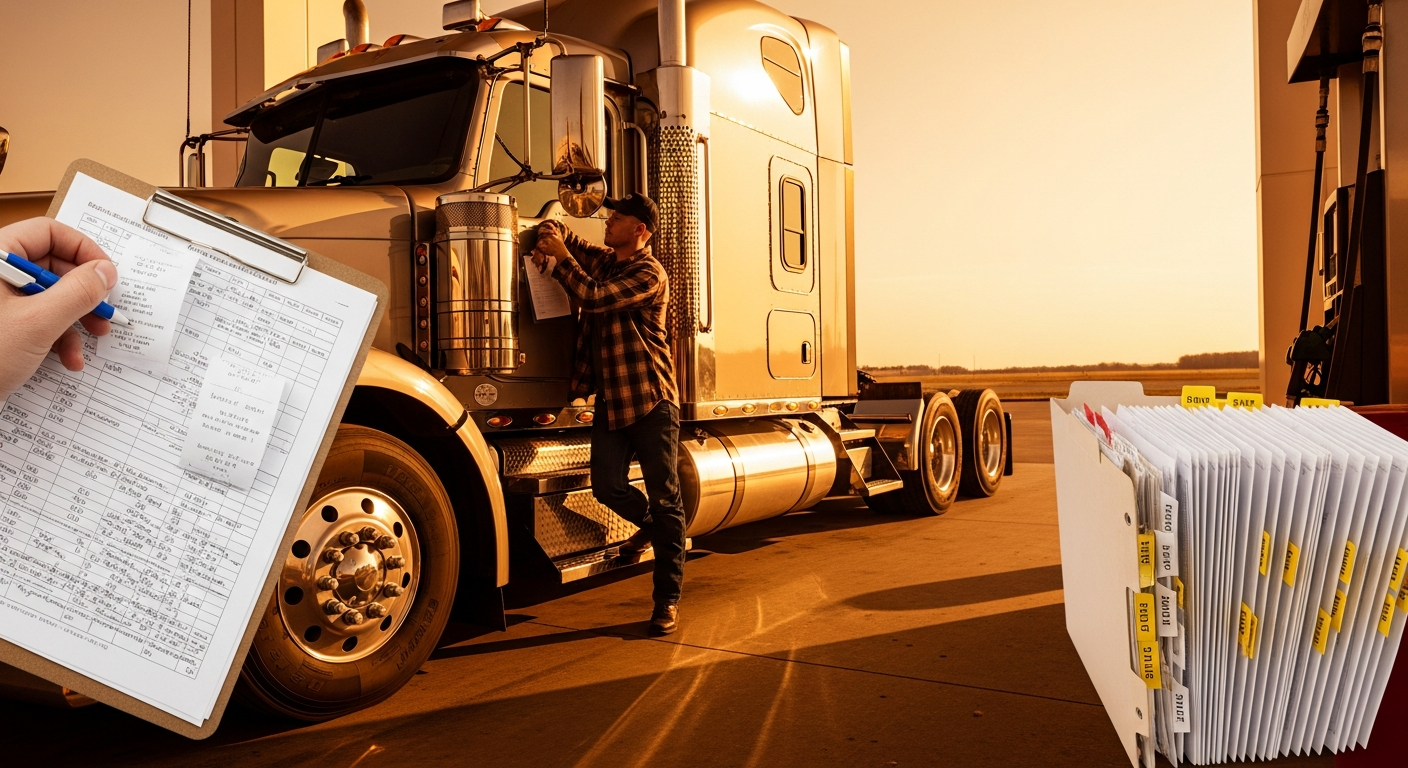
What Records You Actually Need Before You Start
Before you open your state's IFTA portal or touch a spreadsheet, gather these two categories of records for every truck in your fleet: total miles traveled per jurisdiction and total gallons purchased per jurisdiction for the quarter. That's the core of every IFTA return — everything else is math built on those two inputs.
For mileage, you need trip sheets, ELD reports, or driver logs that break down miles by state or province — not just total odometer miles. For fuel, you need actual pump receipts or electronic fuel card statements that show the date, location (city and state), gallons purchased, and price per gallon. A credit card statement alone showing a dollar amount at a truck stop is not sufficient for IFTA purposes.
The Three Mistakes That Create IFTA Headaches
Most IFTA problems aren't complicated — they come from the same few errors made over and over. Knowing them in advance means you can catch them before you hit submit, not after you get a notice.
First: mismatched totals. If your total miles from trip sheets don't match your beginning-to-ending odometer difference, an auditor will flag it immediately. Reconcile these before filing. Second: missing or invalid fuel receipts. A receipt without a specific location (just a chain name, no city/state) doesn't satisfy the jurisdiction requirement — you need the exact purchase location. Third: reporting fuel purchased in a non-IFTA jurisdiction, like a federally exempt purchase or a jurisdiction not in the agreement, as if it were a regular taxable gallon. This throws off your fleet's average miles-per-gallon calculation for every jurisdiction.
A Week-Before-Deadline Checklist
One week before the due date, you should already have all the raw data — the actual prep work should happen throughout the quarter, not in the final days. But if you're not there yet, here's how to work through it efficiently in the time you have.
How to Handle Quarters Where Records Are Incomplete
If you're missing fuel receipts or trip data for some portion of the quarter, you have two options: reconstruct or estimate — and IFTA auditors treat these very differently. Reconstruction means going back to the source: fuel card companies can often reprint or email transaction histories, ELD providers can regenerate reports, and Google Maps or route planning records can corroborate stated routes.
Estimation is a last resort and should be documented. If you're estimating miles for a stretch of a route because a driver's log is missing, note the basis for your estimate (standard route, GPS history, etc.) in writing and keep that note with your return records. Filing your best honest return on time is always better than filing late while waiting for perfect records — you can file an amended return later if needed.
What IFTA Auditors Actually Look At
IFTA audits can be triggered by random selection or by anomalies in your return — MPG that doesn't match your equipment type, large refund claims, or inconsistent patterns across quarters. Auditors will ask for source documents: the actual fuel receipts, the actual trip records, and the odometer readings. They compare your reported jurisdiction miles against any GPS or ELD data available.
You are required to keep IFTA records for four years from the filing due date or the date filed, whichever is later. That means a return filed April 30, 2025 for Q1 2025 needs its supporting records kept until at least April 30, 2029. Keep fuel receipts and mileage records organized by quarter and by truck — not in one giant pile — so an audit request doesn't become a multi-day paper hunt.
Building a System So Next Quarter Isn't a Rush
The cleanest IFTA filings come from carriers who treat it as an ongoing process rather than a quarterly fire drill. The simplest habit: at the end of each week, have drivers submit or upload their trip sheets and confirm that week's fuel purchases are logged. Fuel card programs that export data by state purchase location eliminate most of the manual reconciliation work.
If you run ELDs that automatically track jurisdiction miles, make sure you're actually pulling those reports each month rather than waiting until the deadline. Letting three months of data sit in a system you haven't checked isn't the same as having organized records — you still need to reconcile and verify. Set a calendar reminder at the 60-day mark each quarter to do a mid-quarter check so there are no surprises in the final week.
TruckIQ Radar's IFTA filing feature tracks fuel and mileage data by jurisdiction so your quarterly records are organized before deadline week, not during it.
Try TruckIQ Radar →This article is for general informational purposes, not legal advice. Verify specifics against current regulations or your compliance counsel.